$6,999.00 GST Only 1 leftFree Express
$3,999.00 GST Only 1 leftFree Express
From: $3,499.00 GST Free Express
Price range: $2,099.00 through $3,099.00 GST Free Express
$5,399.00 GST Only 1 leftFree Express
$4,399.00 GST Only 1 leftFree Express
$3,399.00 GST Only 1 leftFree Express
From: $4,799.00 GST Free Express
$5,999.00 GST Free Express
$2,999.00 GST Only 1 leftFree Express
$4,999.00 GST Only 1 leftFree Express
Price range: $99.00 through $119.00 GST

Choosing Pulsar Thermal Monoculars

The main choices are size, sensor and whether you want a rangefinder. Smaller bodies are easy to carry. Bigger sensors and lenses show more detail at distance.

Axion Compact: small and light

The Axion Compact XQ19 and XQ30 Pro use a 384×288 sensor. The XG30 and XG35 step up to a 640×480, 12 µm sensor. All four run on an APS3 battery and have a tripod socket.

Telos: bigger lenses and LRF options

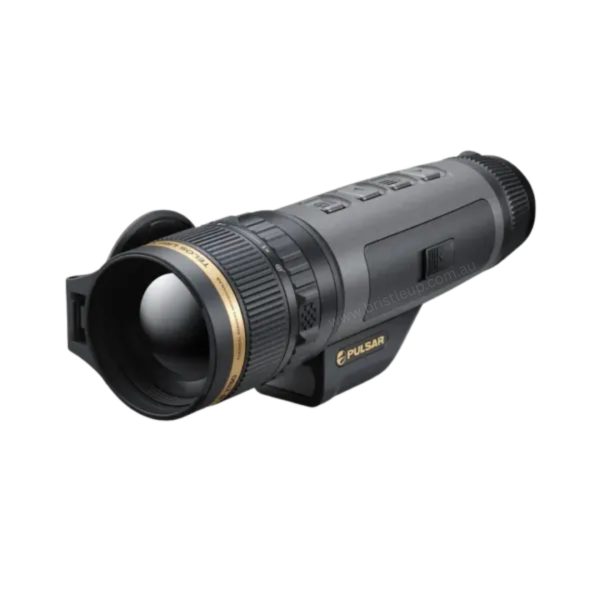
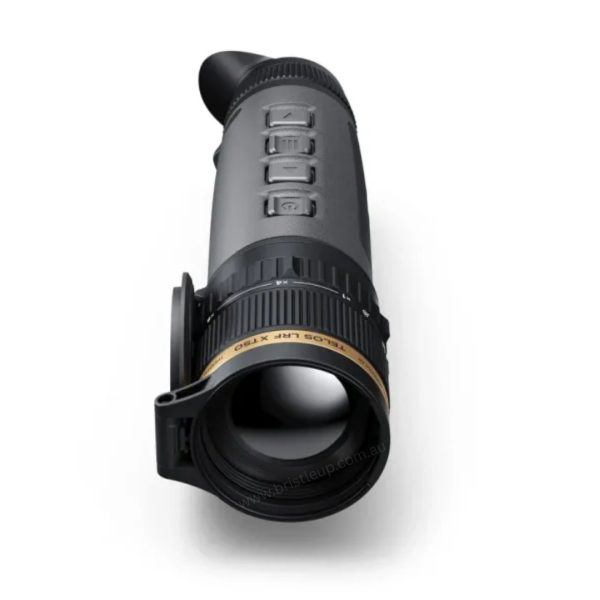
Telos models come with or without a laser rangefinder. The Telos XQ35 uses a 384 sensor, the XG50 and XP50 use 640, the XL50 uses 1024 and the Telos XT50 LRF uses a 1280×1024 sensor. They run on the LPS 7i battery.

Krypton 2 and Oryx

The Krypton 2 XQ35 and Krypton 2 XG50 work as a monocular or clip on in front of a day scope. The Oryx LRF XG35 is a 640 monocular with a built-in rangefinder.

Is a bigger sensor always better in a monocular?

Not always. A bigger sensor gives more detail and a wider view at the same zoom, which helps when you scan open country. It also adds cost and, often, size. If you mostly spot animals inside 300 metres, a 384 or 640 monocular can do the job. Spend more on sensor size if you glass long distances or want to identify animals before you walk in.

Do I need a laser rangefinder?

A rangefinder tells you the distance to the animal, which helps with shot placement and knowing when to close in. If your scope already has one, you may not need it in the monocular as well. To compare other brands, browse all thermal monoculars.
Home
Phone
Cart
Account
SHARE YOUR CART